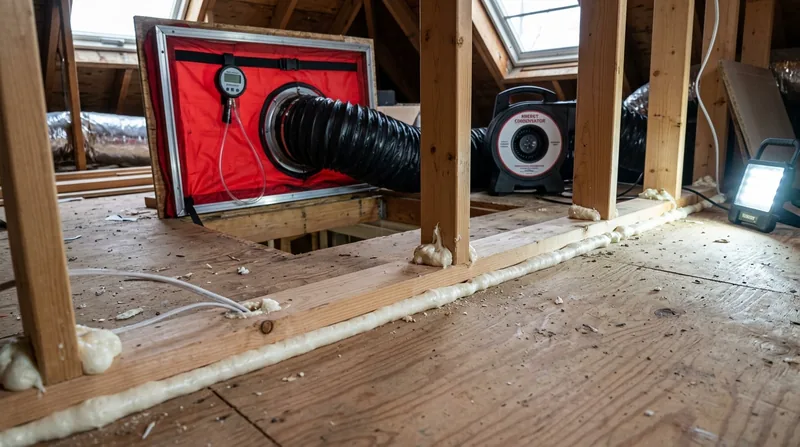




Air leaks around top plates, rim joists, and penetrations in Springfield homes let humid summer air and dry winter drafts move through walls and attics, driving up heating and cooling costs year-round. The older housing stock near downtown and around Leland Grove, along with mid-century ranches scattered across Sangamon County, were built with construction methods that left gaps in the thermal envelope. Winter cold pushes inward through rim joists and basement walls, while summer humidity reverses the vapor drive through attics and wall cavities. Air sealing in Springfield stops that stack effect by sealing the gaps that matter most, cutting the energy penalty tied to seasonal extremes. Our crew identifies and seals the leakage paths that your heating and cooling system is working hardest to condition, then confirms the work so you know where the energy is no longer escaping. When air sealing is the right answer, we say so plainly. When it pairs with attic spray foam insulation or rim joist sealing, the payoff is immediate and measurable.
Why Air Sealing Matters in Springfield's Cold Winters and Humid Summers
Springfield's climate flips the vapor drive twice a year. Winter brings dry cold that pulls interior moisture outward through walls and attics, while humid summers reverse that pressure, driving moisture inward. Gaps at the top plate, around electrical boxes, and where rim joists meet the foundation are the leak highways. Sealing these points stops the air movement that wastes the most energy in older homes, especially the stock built before modern air barriers became standard. A single unsealed top plate in an older attic can account for 10 to 15 percent of your heating load in January.
- Top plate gaps let cold air pour into the attic and heated air escape in winter, reversing in summer as hot air infiltrates.
- Rim joist leaks around the foundation edge are the coldest part of most Springfield basements and the biggest driver of basement heating cost.
- Electrical and plumbing penetrations act as chimneys, especially in homes with two-story construction where the stack effect is strongest.
- Band joists between floors in older downtown and Leland Grove homes are often uninsulated, making second-floor rooms cold in winter.
- Ductwork in unconditioned attics loses 20 to 30 percent of its heating and cooling to leaky seams and penetrations that air sealing closes.
Sealing these gaps is the single fastest way to lower bills tied to the heating and cooling season, and it works in homes of any age.
Key info: Springfield building code requires sealed attics and rim joists to be verified by the building official before final inspection. We help you understand what applies at your address and document the work so your home meets code. Contact your local building department or visit Illinois.gov for permit requirements in your city.
How We Seal Air Leaks in Springfield Homes
Our process starts with a walkthrough to find where air is actually moving. We look at the attic, rim joists, basement walls, and any penetrations where utilities pass through the envelope. Once we identify the leakage paths, we choose the sealing method based on the gap size, the substrate, and whether the area is vented or sealed. Spray foam is the standard for larger gaps and for creating a continuous air barrier; caulk and backer rod work for smaller cracks. We never seal over wet, moldy, or contaminated surfaces, and we always verify that any existing insulation is in sound condition before we seal around it.
- We walk the attic and rim joist areas to map all air leaks and determine which are worth sealing first.
- We clear debris and verify that the substrate is clean and dry before we apply any sealant.
- We use spray foam for large penetrations and rim joist gaps, and backer rod with caulk for smaller cracks and seams.
- We apply mechanical ventilation during cure and observe the manufacturer re-entry window so the work is safe and complete.
- We photograph the sealed areas so you have a record of where the work was done and why it matters.
The goal is a continuous air barrier that stops the stack effect without trapping moisture or creating new problems.
Example: A ranch home in Sherman with an open attic and a vented soffit had cold air pouring in around the top plate in winter. We sealed the top plate with closed cell spray foam, sealed the soffit vents, and re-insulated the attic with open cell foam. The second floor stopped being cold, and the heating bill dropped by 18 percent in the first winter. The homeowner got a written estimate with R-value and thickness before we started, and we stayed within scope.
Air Sealing Methods and When to Use Them
| Method | Description | Best For |
|---|---|---|
| Closed Cell Spray Foam | High-density foam that expands and hardens to seal large gaps and create an air barrier with high R-value per inch. | Rim joists, band joists, large top plate gaps, and areas where R-value and moisture control are both required. |
| Open Cell Spray Foam | Lower-density foam that expands to fill gaps and allow vapor movement, useful for attics and interior walls. | Attic top plates, interior wall penetrations, and vented rim joists where air sealing and insulation are both needed. |
| Caulk and Backer Rod | Flexible sealant applied to small cracks and seams, often backed with foam rod for larger gaps. | Small cracks in drywall, gaps around electrical boxes, and trim seams where spray foam would be overkill. |
| Tape and Mastic | Specialized ductwork tape and mastic sealant applied to HVAC seams and penetrations in attics. | Sealing ductwork leaks in unconditioned attics where air sealing improves heating and cooling efficiency. |
The right method depends on gap size, location, and whether the area is vented or sealed. We specify the method in the estimate so you know what you are paying for and why.
Air Sealing Cost in Springfield: What to Expect
Air sealing jobs in Springfield typically start at $650 for a focused scope, such as sealing the rim joist in a single-story home or the top plate in a small attic. Larger homes, multi-story construction, and jobs that require closed cell spray foam around multiple rim joists or complex penetrations cost more. The biggest variables are the square footage of the rim joist or attic, the number of penetrations, access difficulty, and whether the area is vented or needs to be sealed as part of a larger insulation project. A two-story home in Chatham with rim joist sealing and top plate work might run $1,200 to $1,800. A simple attic top plate seal in a ranch might be $700 to $900. Getting 2 or 3 estimates from contractors who provide written specs with R-value and thickness is the best way to understand what the market is charging and what you are actually buying.
We provide a free written estimate within 24 hours. Call (217) 441-9079 or visit our pricing page for more detail on what drives costs and what is included in a typical job.
What to Look for When Hiring an Air Sealing Contractor Near Springfield
The spray foam trade has rig-and-run outfits that spray a job in an afternoon and disappear, and it has national franchises with overhead that inflates the price. The local independent contractor is positioned against both. When you are comparing estimates for air sealing in Springfield or nearby towns like Riverton, Rochester, and Jerome, look for a contractor who gives you a written estimate with R-value and thickness specs, not a verbal quote. Ask for references from recent jobs, verify that the contractor is fully insured, and confirm that they understand your local building code and permit requirements. If the job includes attic work, ask whether they will use mechanical ventilation during cure and what re-entry window they recommend. Never hire a contractor who promises immediate re-entry or who quotes a price far below the market. The best signal is an honest conversation about what air sealing will and will not do for your home.
- Request a written estimate with R-value, thickness, and material specs so you can compare accurately across contractors.
- Verify that the contractor is fully insured and can provide a certificate of insurance before work begins.
- Ask for at least two references from jobs completed in the past 12 months in Springfield or the surrounding area.
- Confirm that the contractor understands your local building code and will help you navigate any permits required at your address.
- Check that the contractor uses mechanical ventilation during cure and respects the re-entry window recommended by the foam manufacturer.
- Avoid contractors who offer a price per board foot without looking at your home, or who promise energy savings as a dollar figure.
A local contractor who listens to your problem, walks your home, and explains the work in plain language is the one worth hiring. Contact us for a free estimate and a chance to talk through what makes sense for your home.
Air Sealing in Springfield: Pricing Guide
| Service | Price | Details |
|---|---|---|
| Small attic top plate seal | Starting at $650 | Closed or open cell foam for top plate gaps in single-story homes with straightforward access and moderate square footage |
| Rim joist and band joist sealing | Starting at $800 | Closed cell spray foam for rim and band joists in basements, varies with joist length, foundation type, and whether sealing is partial or full perimeter |
| Multi-story home with attic and rim work | Starting at $1,200 | Combined sealing of top plates, rim joists, and penetrations in two-story homes or homes with complex envelope geometry and multiple sealed zones |
| Large or complex air sealing project | On estimate | Extensive rim joist work, multiple stories, sealed attic with ductwork, or integration with full attic insulation requires on-site assessment for accurate pricing |
| Travel and service call | Included | No separate mileage fee or travel charge in Springfield and surrounding Sangamon County service areas within standard radius |
| Free written estimate | No cost | Response within 24 hours at (217) 441-9079, includes R-value and thickness specs, no obligation to book |
Indicative pricing, the exact cost depends on square footage, finish, and site access. Free personalized estimate within 24h at (217) 441-9079.


