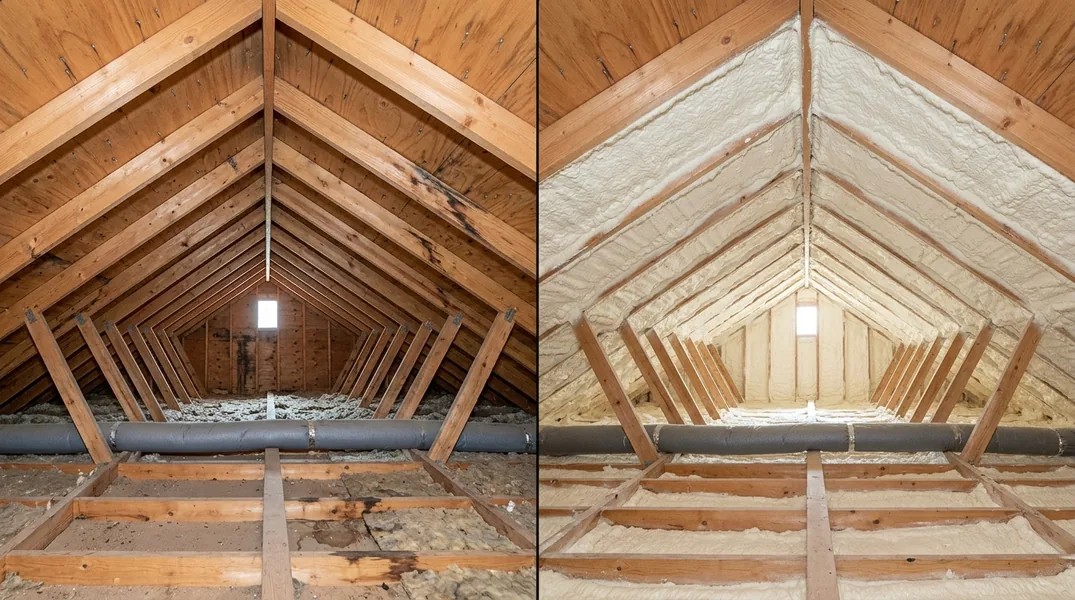
Understanding Spray Foam Attic Insulation: Open Cell vs Closed Cell
When homeowners in Springfield think about upgrading their attic insulation, spray foam has become a top choice. Unlike traditional fiberglass batts, spray foam expands to fill every gap and crack, creating an air-tight seal that significantly improves energy efficiency. However, not all spray foam is created equal. The two main types, open cell and closed cell, offer different benefits and come with different price points. Understanding the differences between these options is essential before making a decision for your home.
The choice between Open Cell Spray Foam Insulation and Closed Cell Spray Foam Insulation depends on your specific needs, budget, and climate. Both provide superior air sealing compared to conventional insulation methods, but they perform differently when it comes to moisture management, structural support, and thermal resistance. In this guide, we'll break down the key differences so you can make an informed choice for your Springfield home.
What Is Open Cell Spray Foam Insulation?
Open cell spray foam is a lighter, less dense material that expands significantly after application. The cells within the foam are not completely closed off from one another, which allows air and moisture to pass through the material. This characteristic makes open cell foam softer and more flexible than its closed cell counterpart. When sprayed into your attic, open cell foam conforms perfectly to irregular surfaces, joists, and wiring, filling every void without gaps. The expansion ratio is typically around 3.5 to 4 pounds per cubic foot, meaning it rises and fills spaces generously.
One of the main advantages of open cell foam is its cost effectiveness. It generally costs less per square foot than closed cell options, making it an attractive choice for homeowners watching their budget. Additionally, open cell foam provides excellent sound dampening properties, which can reduce noise from outside or between rooms. Since the material is more permeable, it also allows your attic to breathe, which can be beneficial in certain climates. However, because moisture can pass through it, open cell foam is not ideal for areas prone to water intrusion or for creating a fully sealed, unvented attic space.
What Is Closed Cell Spray Foam Insulation?
Closed Cell Spray Foam Insulation is a denser, more rigid material where the cells are completely closed and do not allow air or moisture to pass through. This creates a true vapor barrier and moisture shield, making closed cell foam ideal for creating a fully sealed, unvented attic space. The density of closed cell foam typically ranges from 1.5 to 2 pounds per cubic foot, and it provides a higher R-value per inch compared to open cell foam. This means you need less material to achieve the same insulation level, which can be important in attics with limited space.
The primary benefit of closed cell foam is its superior moisture resistance and structural integrity. Because it creates an impermeable barrier, closed cell foam protects your attic from water damage, condensation, and mold growth. It also adds structural rigidity to your roof deck, which can help with wind resistance and overall home durability. For homeowners in Springfield dealing with Illinois weather patterns, including seasonal moisture and temperature fluctuations, this protection is valuable. The trade-off is that closed cell foam costs more upfront, but many homeowners find the long-term benefits justify the investment.
Sealed Attic Insulation: Which Type Works Best?
The concept of a sealed attic, also known as an unvented attic, has gained popularity in recent years. When you create a sealed attic space with spray foam, you're essentially moving the thermal boundary from the attic floor to the roof deck and exterior walls. This approach offers several advantages, including better temperature control, reduced HVAC strain, and protection against outside air infiltration. However, achieving a true sealed attic requires the right type of insulation.
Closed Cell Spray Foam Insulation is the preferred choice for creating an unvented attic spray foam system because it acts as both an insulator and a vapor barrier. This dual function is critical in a sealed attic, where moisture management becomes more important. When you seal your attic with closed cell foam, you prevent warm, humid air from the living spaces below from reaching the cold roof deck, which eliminates the conditions that cause condensation and mold. Open cell foam can be used in sealed attics if a separate vapor barrier is installed, but this adds complexity and cost. For most homeowners in Springfield considering a sealed attic, closed cell foam is the more straightforward and reliable solution.
Attic Spray Foam Insulation Cost in Springfield: What to Budget
Cost is often a deciding factor when homeowners choose between open cell and closed cell foam. Open cell spray foam typically costs between $0.50 and $1.00 per board foot, while closed cell foam ranges from $1.50 to $2.50 per board foot or higher. For an average attic space of 1,500 square feet, you might expect to spend anywhere from $3,000 to $8,000 or more, depending on which type you choose and the complexity of your installation. These figures are general estimates, and actual costs can vary based on your specific situation.
When evaluating pricing for spray foam attic insulation, it's important to consider the long-term value, not just the initial cost. Closed cell foam, while more expensive upfront, offers better insulation value per inch and superior moisture protection, which can lead to greater energy savings and fewer repairs down the road. Open cell foam is a solid budget-friendly option if moisture control is not a primary concern and you don't need a fully sealed attic. To get an accurate estimate for your home, Springfield Spray Foam Insulation recommends scheduling a free estimate so our team can assess your attic and provide personalized recommendations based on your needs and budget.
Choosing the Right Spray Foam for Your Springfield Home
Making the decision between open cell and closed cell spray foam comes down to your priorities. If energy efficiency and cost savings are your main goals, and you're comfortable with a ventilated attic approach, open cell foam offers good insulation value at a lower price point. If you want maximum protection against moisture, a sealed attic system, and the highest R-value per inch, closed cell foam is the better choice despite the higher upfront investment. Consider your home's current condition, your budget, and your long-term plans for the property.
The climate in Illinois, with its cold winters and humid summers, makes moisture management a significant consideration. A properly installed Attic Spray Foam Insulation system, whether open or closed cell, will improve your home's energy performance and comfort. However, closed cell foam provides an extra layer of protection that many Springfield homeowners find worthwhile. Rather than guessing, reach out to Springfield Spray Foam Insulation at (217) 441-9079 to discuss your specific situation. Our experienced team can evaluate your attic, explain the pros and cons of each option, and help you make the best decision for your home and wallet.
Looking for a professional spray foam insulation contractor in Springfield? Springfield Spray Foam Insulation responds fast for all your spray foam insulation needs.
Get a Free Quote