Understanding Central Illinois' Unique Climate Challenges
Living in Central Illinois means your home faces a climate that swings dramatically between seasons. Summers bring oppressive humidity that can reach 70 to 80 percent, while winters drop temperatures well below freezing with low humidity levels. This extreme seasonal variation puts stress on your home's envelope in ways that many homeowners don't immediately recognize. Your insulation isn't just about keeping warm air in during winter or cool air in during summer. It's also about managing moisture and preventing the structural damage that comes from condensation, mold growth, and wood rot.
The challenge becomes even more pronounced if you have a crawl space or pier and beam foundation, which are common in the Springfield area. These spaces sit between your living area and the ground, making them especially vulnerable to humidity infiltration during summer months. Without proper insulation and moisture control, your crawl space can become a breeding ground for mold, dust mites, and other indoor air quality problems that affect your entire home. That's why choosing the right insulation strategy for your specific climate is not a luxury. It's essential for protecting your investment and your family's health.
Why Traditional Insulation Falls Short in Humid Climates
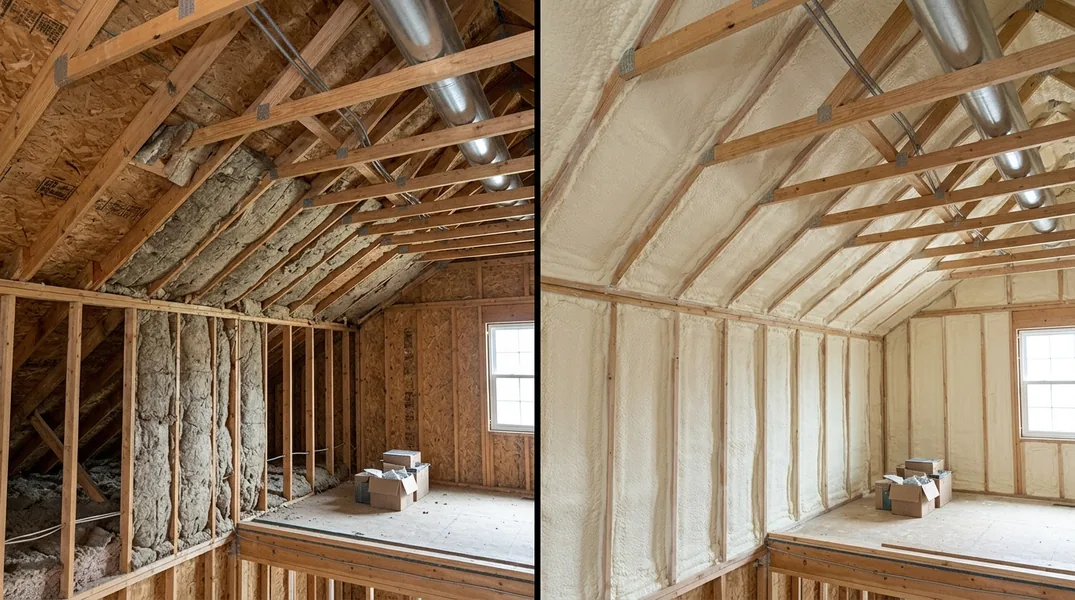
Fiberglass batts and blown-in cellulose have been the standard for decades, but they have a critical weakness in humid climates like ours. These materials absorb moisture like a sponge. When summer humidity creeps into your crawl space or attic, traditional insulation traps that moisture inside its fibers. Over time, this moisture promotes mold growth, reduces the insulation's R-value, and can lead to structural damage in your home's framing and floor joists. The problem compounds because once these materials get wet, they rarely dry out completely in a crawl space environment where air circulation is limited.
Additionally, traditional insulation doesn't create an air barrier. Even if you install it perfectly, air can still leak around edges, through gaps, and past fasteners. In Springfield, where we experience both extreme heat and cold, these air leaks mean your HVAC system works overtime to maintain comfortable temperatures. Your energy bills climb, and your home's comfort suffers. This is where spray foam insulation offers a fundamentally different approach that better matches the demands of our regional climate.
How Spray Foam Insulation Handles Humidity and Temperature Swings
Closed Cell Spray Foam Insulation is engineered to perform exactly where traditional insulation fails. The closed cell structure means the material doesn't absorb moisture. Instead, it repels it. When humidity tries to penetrate your crawl space during a hot, muggy summer day, the foam acts as a moisture barrier, preventing that humid air from reaching your home's wooden structure. This single feature alone makes it ideal for basements, crawl spaces, and pier and beam foundations in Central Illinois.
The air-sealing properties of spray foam address the second major weakness of traditional insulation. When professionally applied, spray foam expands to fill every cavity, crack, and gap. It creates a continuous thermal and air barrier that traditional batts simply cannot match. This means fewer temperature fluctuations inside your home, more consistent comfort year-round, and significantly lower energy costs. For Springfield homeowners dealing with our humid summers and cold winters, this performance difference translates to real savings and peace of mind.
There's also the question of durability. Spray foam doesn't settle, compress, or degrade over time like fiberglass can. A properly installed foam barrier in your crawl space will maintain its R-value and protective properties for decades, making it a long-term investment that pays dividends through lower energy bills and avoided moisture damage.
Best Insulation for Crawl Space: Why Spray Foam Wins
If you're researching the best insulation for crawl space applications, spray foam consistently outperforms other options in humid climates. Crawl spaces are naturally vulnerable to moisture problems because they're partially below grade, exposed to ground moisture, and often lack adequate ventilation. Traditional crawl space insulation like fiberglass batts installed on floor joists leaves the rim band (the band board that sits on top of your foundation) uninsulated and exposed. This creates a thermal bridge that allows heat to escape in winter and allows warm, humid air to enter in summer.
Closed cell spray foam solves this problem by insulating the rim band, band board, and rim joist area completely. It also can be applied to the foundation walls themselves, creating a continuous barrier that keeps your crawl space warmer in winter and drier in summer. For homeowners with pier and beam foundations, this approach is particularly effective. Crawl space spray foam application eliminates cold floors, reduces energy loss, and prevents the moisture problems that lead to mold, wood decay, and pest infiltration.
Many homeowners also struggle with cold floors in winter, especially in homes with crawl spaces. Insulating the floor joists and rim band with spray foam dramatically improves floor comfort and reduces the temperature difference between your living space and the crawl space below. This is one of the most noticeable benefits that homeowners report after upgrading their crawl space insulation.
Cold Floors Insulation: Solving a Common Springfield Problem
Cold floors are a complaint we hear constantly from homeowners throughout Central Illinois, especially those with crawl space or pier and beam construction. During winter, the ground temperature under your home stays cold, and without proper insulation between your living space and that cold foundation area, heat naturally flows downward through your floors. Your feet feel cold, you turn up the thermostat, and your energy bills spike. It's an uncomfortable and expensive cycle that most people simply accept as normal. But it doesn't have to be.
Closed Cell Spray Foam Insulation applied to floor joists and the rim band area creates a thermal break that stops this heat loss. The foam's high R-value per inch means you get significant insulation value without needing excessive thickness. Homeowners often report noticeably warmer floors within days of having spray foam installed in their crawl space. Beyond comfort, this improvement means your heating system doesn't have to work as hard to maintain your desired temperature, resulting in measurable energy savings throughout the winter months.
The moisture control benefit is equally important. Cold floors combined with humidity create condensation, which promotes mold growth on wood framing and can eventually lead to structural problems. By controlling both temperature and moisture, spray foam insulation addresses the root cause of cold floors rather than just treating the symptom.
Spray Foam Insulation Cost in Springfield: What to Budget
When homeowners start researching spray foam insulation, cost is understandably a major consideration. Pricing for spray foam projects varies based on several factors including the size of the area being insulated, the type of spray foam (closed cell versus open cell), and the complexity of the installation. Crawl space projects typically range from moderate to significant investments depending on the square footage and whether you're insulating just the rim band or the entire foundation perimeter and floor joists.
However, it's important to evaluate spray foam cost in the context of long-term value. While the upfront investment is higher than traditional insulation, the energy savings typically recover that cost within 5 to 7 years. Beyond that payback period, you're enjoying pure savings on your heating and cooling bills. Add in the avoided costs of mold remediation, structural repairs, and potential health issues from poor indoor air quality, and the true value becomes clear. Many homeowners also find that spray foam insulation increases their home's resale value, as buyers increasingly recognize the benefits of superior insulation and moisture control.
To understand what a spray foam project will cost for your specific home, the best approach is to request a free estimate from Springfield Spray Foam Insulation. Our team can assess your crawl space, evaluate your insulation needs, and provide detailed pricing based on your unique situation. Call us at (217) 441-9079 to schedule your consultation.
Taking Action: Getting Professional Spray Foam Installation Near You
If you're experiencing cold floors, high energy bills, or moisture problems in your crawl space, the time to act is now. Central Illinois' climate demands insulation solutions that can handle both extreme humidity and freezing temperatures. Spray foam insulation has proven itself as the most effective technology for these conditions, and professional installation ensures you get maximum performance and longevity from your investment.
Springfield Spray Foam Insulation serves homeowners throughout the region with expert installation of Attic Spray Foam Insulation, crawl space spray foam, and other spray foam solutions tailored to your home's specific needs. Our team understands the local climate challenges and knows exactly how to design insulation systems that perform year-round. Don't let another winter pass with cold floors or another summer with moisture problems in your crawl space. Contact Springfield Spray Foam Insulation today at (217) 441-9079 or request a free estimate to learn how spray foam can transform your home's comfort and efficiency.
Looking for a professional spray foam insulation contractor in Springfield? Springfield Spray Foam Insulation responds fast for all your spray foam insulation needs.
Get a Free Quote